

Centre overview
FuSE brings together RGU researchers across disciplines and external collaborators to foster applied, impactful research exploring how higher education institutions and educators can prepare learners to address twenty-first century global issues.
Aims
- Promote high-quality, interdisciplinary education research around FuSE's core specialisms.
- Contribute to the development of evidence-based policy and practice at RGU, nationally and internationally.
- Nurture a supportive community and intellectually stimulating environment for education research at RGU.
- Act as a focal point for RGU’s education research activities and enable external collaboration.
FuSE carries out institution-wide research into educational enhancements at RGU on behalf of the university. Our researchers also work with a wide range of partners within the UK and internationally, with current collaborations spanning from Alaska to Australia.
Themes
FuSE’s focus on equipping learners to respond effectively to twenty-first-century issues cuts across all of RGU’s interdisciplinary research themes:
Focused on addressing many of the global challenges set out in the UN Sustainability Goals, this theme brings together researchers who approach these issues from a breadth of disciplinary perspectives that include the life sciences, engineering and computing but also embraces the social sciences and business disciplines.
This theme captures our research which both promotes and protects human health and wellbeing in communities. It covers a breadth of research from long term conditions to new drug discovery and a wide range of disciplines spanning health, social and life sciences and pharmacy.
Our research in this theme embraces a broad range of topic areas relating to social justice and creative practice, drawing together researchers from different disciplinary backgrounds including art and design, architecture, social sciences, law, and humanities .
Our research in this theme covers a broad range of computational research from Artificial Intelligence to interactive machine learning and cybersecurity and explores the impacts and implications of the digital for different domains including health, net zero, cities and creative practice.
Our people
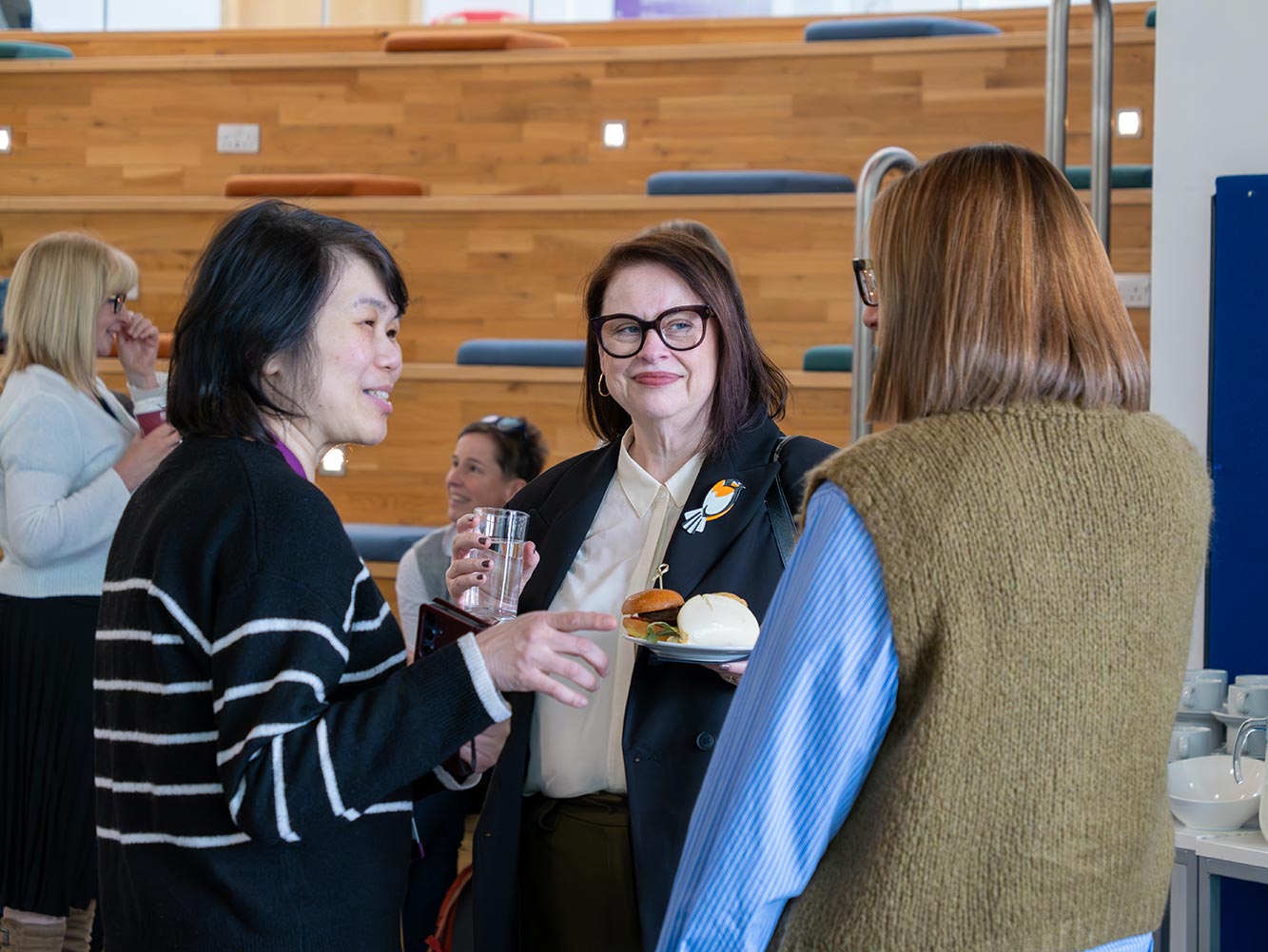
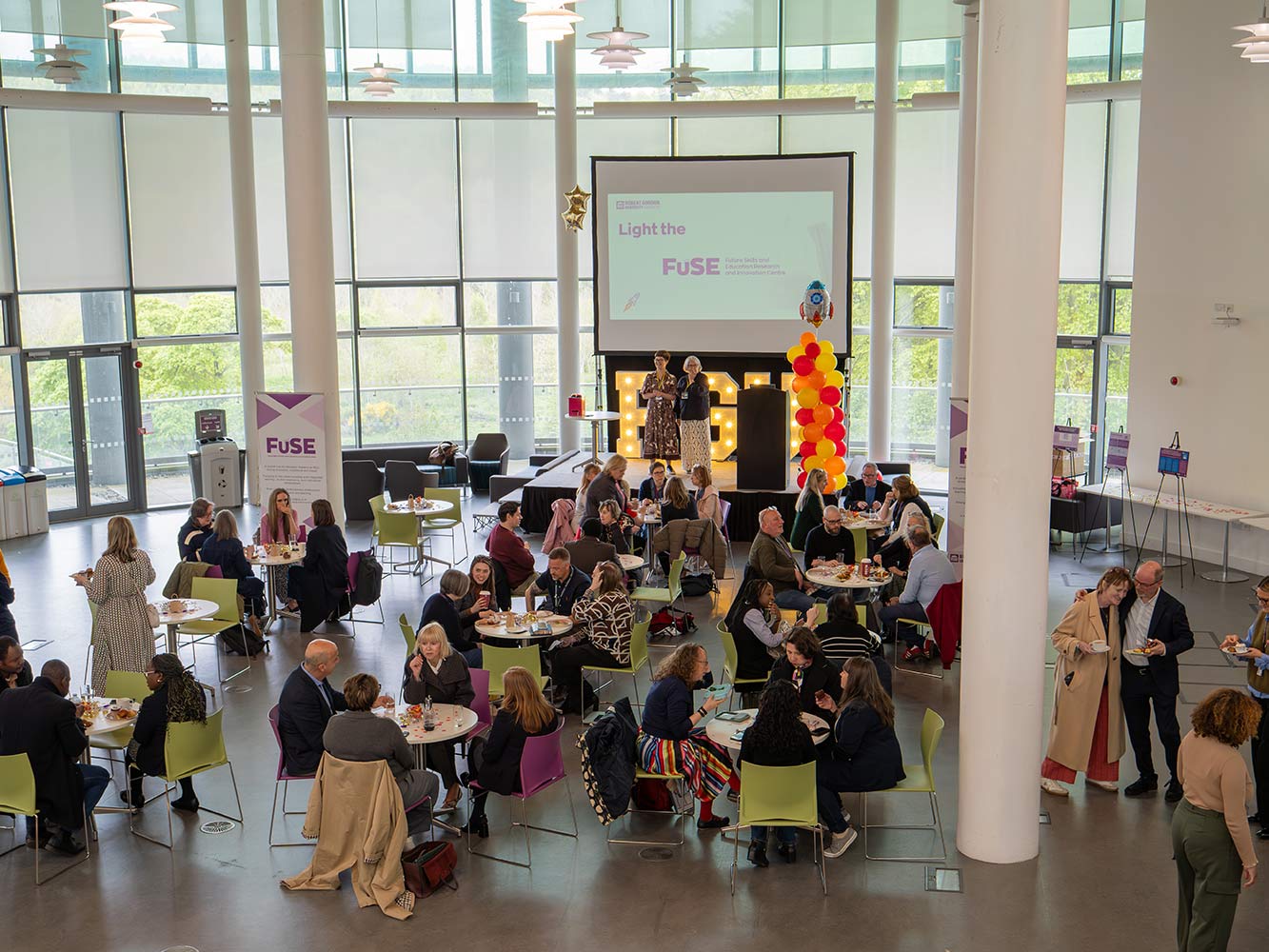
FuSE’s diverse members are united by a passion for education research and include colleagues from all six of RGU’s academic schools as well as key professional services. We bring together wide-ranging disciplinary and pedagogical expertise to enable innovative research into teaching, learning and the student experience. FuSE’s intellectual vibrancy is further strengthened by our doctoral student community, who add to the rich mix of interests, perspectives and methodological approaches with the Centre.
Centre Leadership Team
Pauline Bremner
Associate Professor
Rachel McGregor
Academic Development Lead
Find out more about the centre and its members:
Funding, projects & publications
Featured projects
Gen AI Use in Assessment at RGU: a Content Analysis
Following the introduction of GenAI and RGU’s AI Assessment Scale-based framework, this study analyses assessment briefs to examine institutional trends in GenAI use, staff adoption, and assessment design. Using longitudinal quantitative content analysis, it will provide evidence of how GenAI is being integrated into summative assessment across the university.
Read more on Worktribe - Gen AI Use in Assessment at RGU
Experiences of Allied Health Students and Early Career Allied Health Professionals in Remote Areas of Western Australia and Scotland
Remote and rural areas in Western Australia and Scotland face ongoing allied health workforce shortages. This qualitative comparative study explores how remote placements and early-career experiences influence workforce intentions, examining the experiences of students and professionals across both contexts to identify factors supporting recruitment, transition and retention.
Read more about the centre's projects:
Featured publications
- Wynne, D., Hancock, E., Stage, E., & Cooper, K. (2025). An exploration of student experiences and perceptions of a physiotherapy student-led clinic. Internet Journal of Allied Health Sciences and Practice, 23(2), 19. https://rgu-repository.worktribe.com/output/2836011
- Forbes-McKay, K. E., Bremner, P. A., Johnston, P., & Air, C. (2025). Exploring independent learning (IL) and its relationship to mindset, motivated strategies for learning and academic performance. Journal of Applied Research in Higher Education, 17(1), 205-218. https://rgu-repository.worktribe.com/output/2189199
- Zarb, M., & Pirie, E. (2026). Shadow podcasts: exploring student perspectives of AI-generated supplementary learning materials. Journal of Perspectives in Applied Academic Practice, 14(1), 25-38. https://doi.org/10.56433/k04zqd46
Read more about the publications from FuSE on Worktribe:
Study opportunities
Find out about the topics and subjects you could study at the centre:
In the context of Higher Education, digital competencies are increasingly recognised as a necessary skillset that students should continuously develop to navigate an evolving digital learning and professional landscape. However, the existence of digital divides in students creates significant challenges, even at the level of baseline digital literacy.
This project explores the impact of generative AI on student and teacher practices, examining early adoption to identify effective use patterns that enhance student learning and support educators in integrating AI into pedagogy.
This study responds to current UK policy signals that place digital environments, data, equity of participation, and responsible AI at the centre of quality and student experience, and to REF’s continued emphasis on demonstrable impact - making robust pedagogy-to-impact evaluation both timely and essential.
Impact & knowledge exchange
Accolades
Accolades and partnerships that highlight our growing reputation as a centre of research excellence:
- Dr Pauline Bremner won 2nd prize in the track for her presentation at HETL 2025
Worktribe - HETL Conference International Higher Education Teaching and Learning Association Conference 2nd Prize for Best Paper in Track - The Work-Integrated University Project, led by Dr Erica Cargill, was awarded a place on Advance HE’s Change Academy, a global programme designed to support institutional teams lead systemic educational transformation.
- Francis MBanefo was awarded the people’s choice award at RGU’s Three Minute Thesis (3MT) competition, which recognises excellence in communicating doctoral research to a non-specialist audience.
- Leila Neshat Mokadem received the award for Engaging the Public with Research at the Curious Minds Research Awards in relation to her doctoral research exploring how we can create more equitable approaches to public involvement in health research.
Case Studies
Coil@UArctic
A future-focused, globally connected, virtual learning strategy for UArctic members and partner institutions with a focus on biodiversity education and other issues, important to the North.
Partnerships & collaboration
Partnerships and collaborations are at the heart of FuSE. By connecting diverse perspectives, voices and expertise, we strive to foster collaborative research that informs practice, shapes policy and supports positive educational change.
Our partners
- The University of the Arctic (UArctic) is a network of universities, colleges, research institutes, and other organizations concerned with education and research in and about the North. Dr Izzy Crawford currently leads the thematic network COIL@UArtic, with a focus on biodiversity education.
- Western Australia Centre for Rural Health (WACRH) at The University of Western Australia aims to improve rural, remote and Aboriginal health through education and support for students from all Australian universities. Dr Donna Wynne is currently co-investigator on a project with WACRH exploring the experiences of Allied Health Students and Early Career Professionals in remote areas of Western Australia and Scotland.
Opportunities for collaboration
We welcome partnerships that enhance educational practice, generate evidence-informed innovation, and create meaningful impact across disciplines, institutions and professional contexts.
Collaborators can get involved with FuSE’s work through joint research projects and knowledge exchange activities.
The Centre also runs a programme of online events that are open to all.
News & insights
Read the latest posts from FuSE on LinkedIn:
Work with us
If you would like to partner with the centre or have any questions about our research, please email: